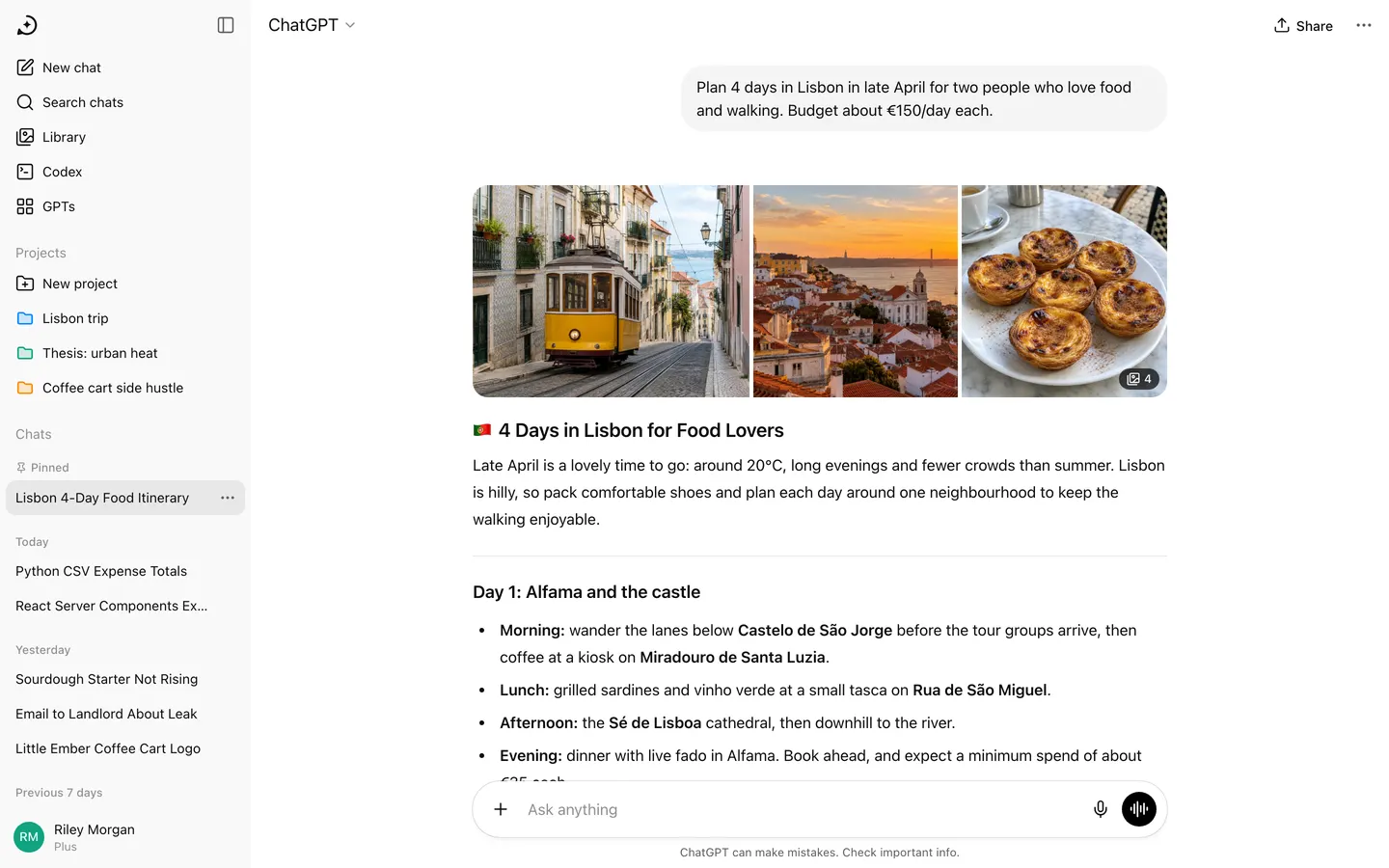
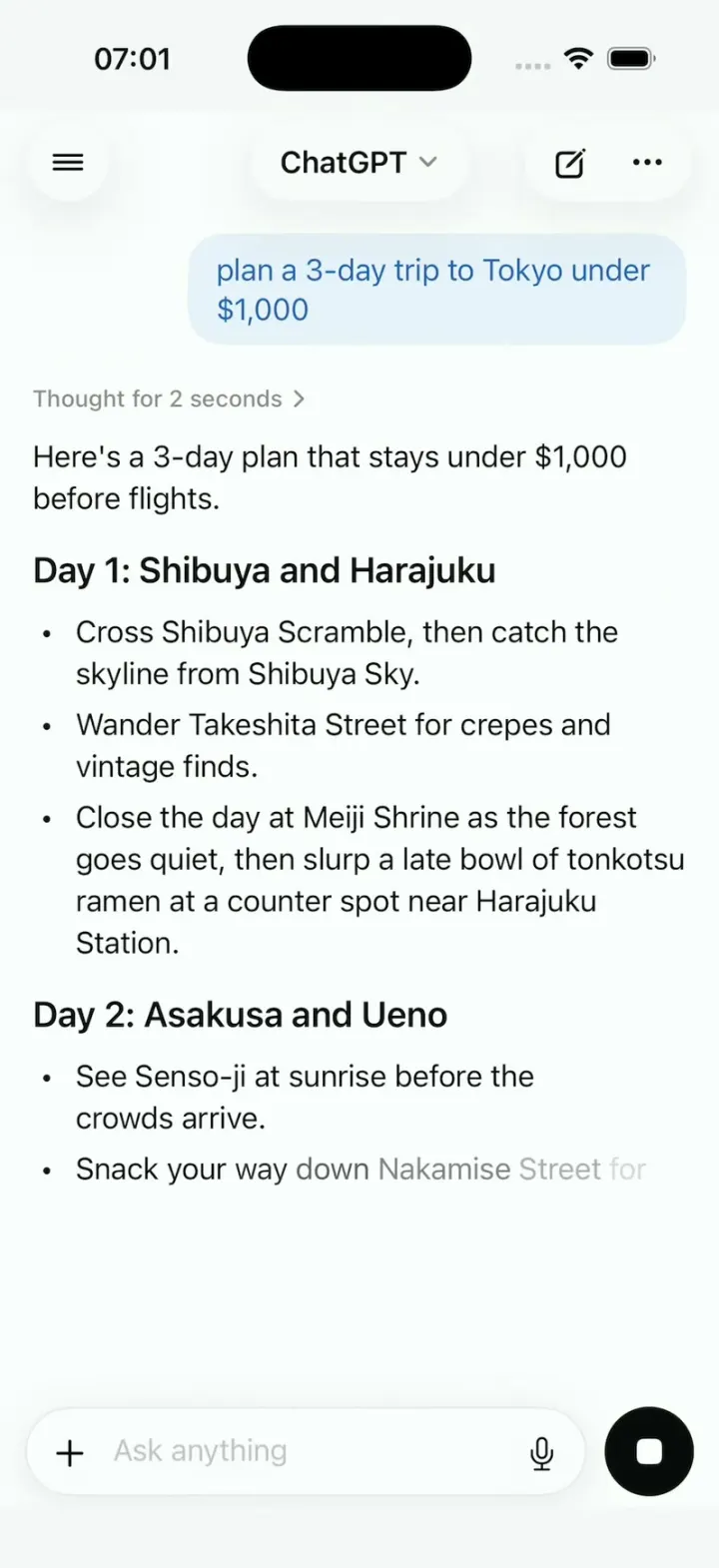
Streams GPT answers, draws images and summarizes PDFs. A fast start for your own ChatGPT-style web app.
AI chatbot templates
Working AI chat apps you can make your own, for founders and creators who'd rather not start from a blank screen. Remix one, then change it by chatting in Vibecode.
TL;DR
What is an AI chatbot template?
An AI chatbot template is a ready-made chat app you start from, instead of building one from scratch.
Most you'll find are scripts or design files. These 8 are working apps for iPhone and the web. Remix one and it's $0 on a new account!
- GPT, Gemini and Claude are built in, so there are no AI keys to set up
- We remixed and tested every one on November 24, 2026
- Need one for your business? Start from our support-bot prompt
8 working apps you can remix
A ChatGPT-style iPhone app with four GPT models, image answers and a voice mode that talks back.
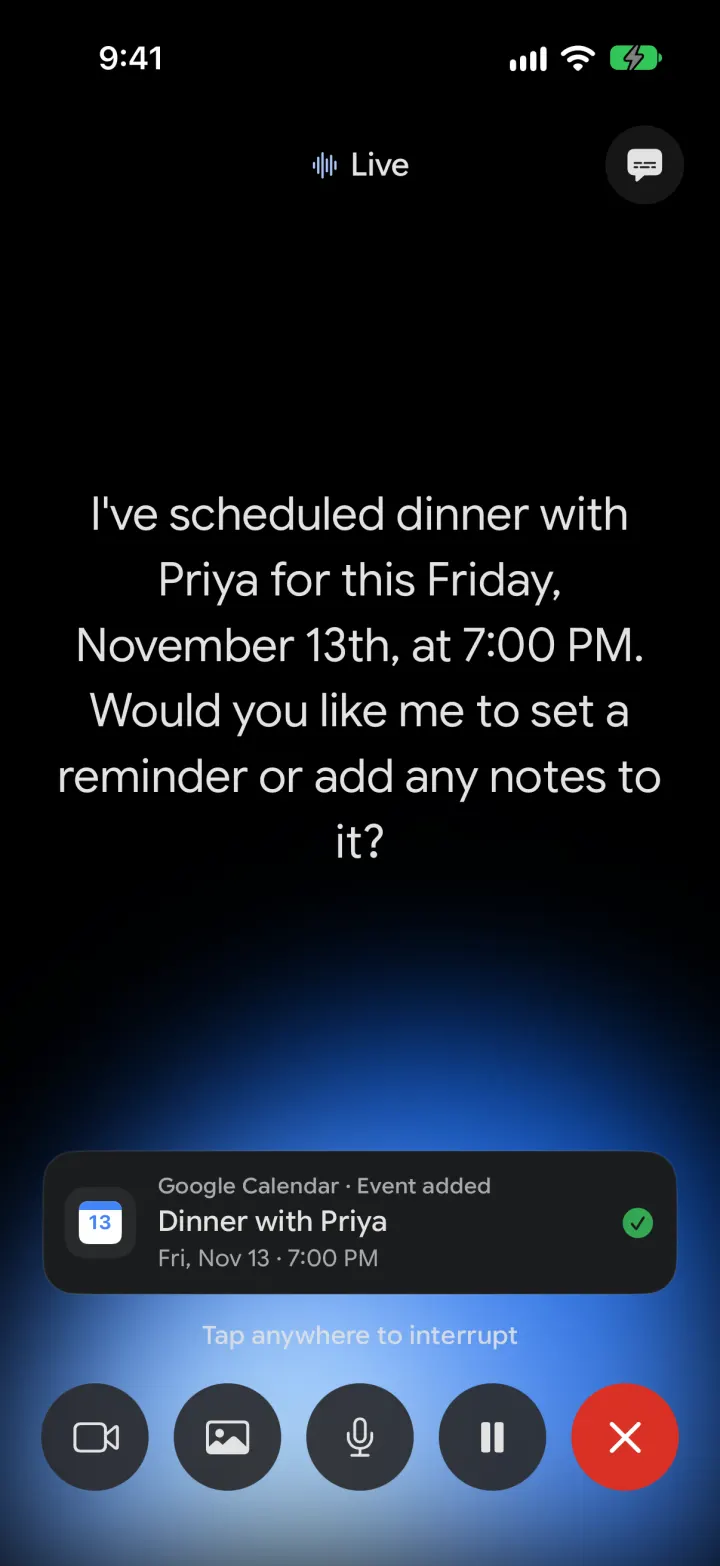
Gemini for iPhone: answers grounded in Google Search, Nano Banana images and a Live mode you can talk to.
Claude Duet
iOSYour own Claude Duet: an Opus 5.5 agent that researches, runs tasks in the background and builds pages for you.
Comet Clone
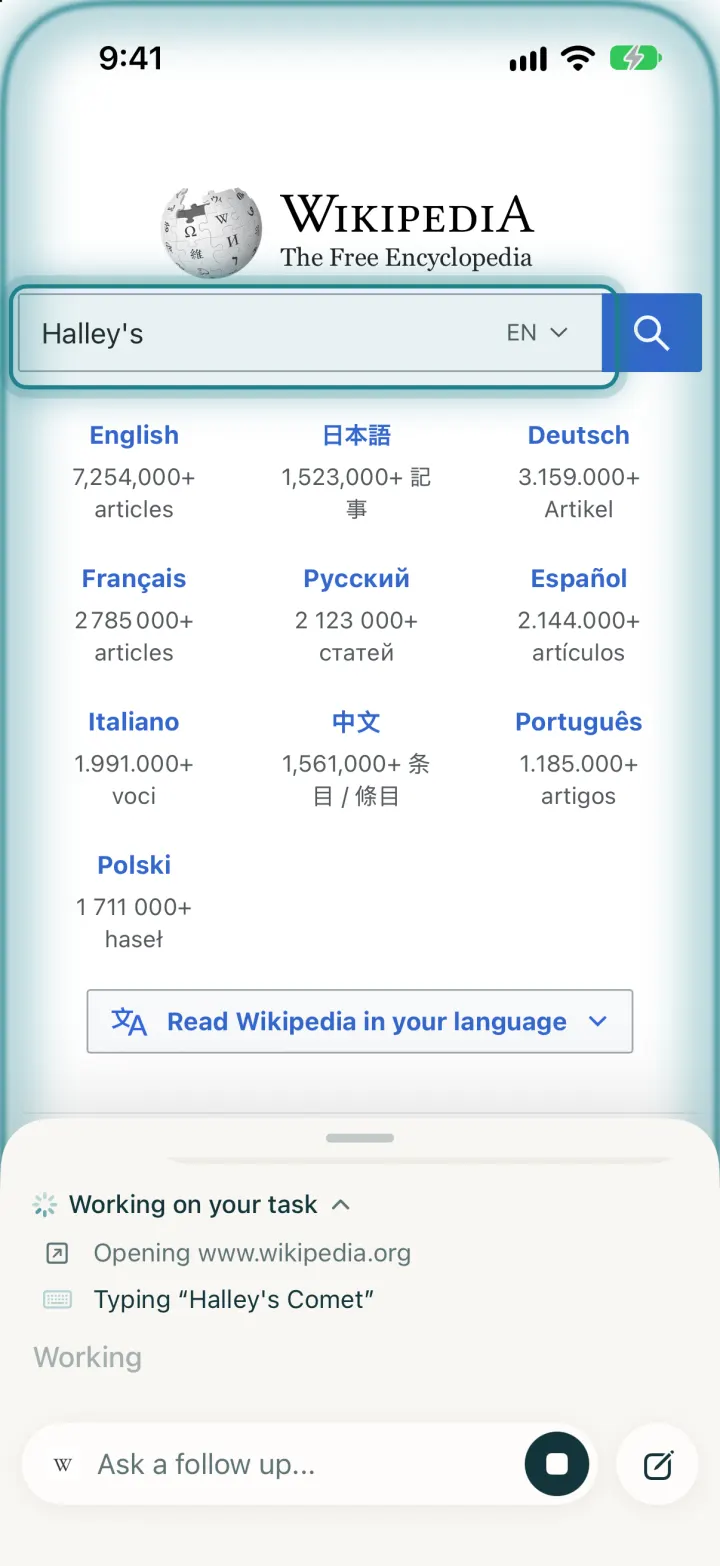
iOSAn iPhone browser with an AI assistant that opens sites, types and clicks for you, then answers with sources.
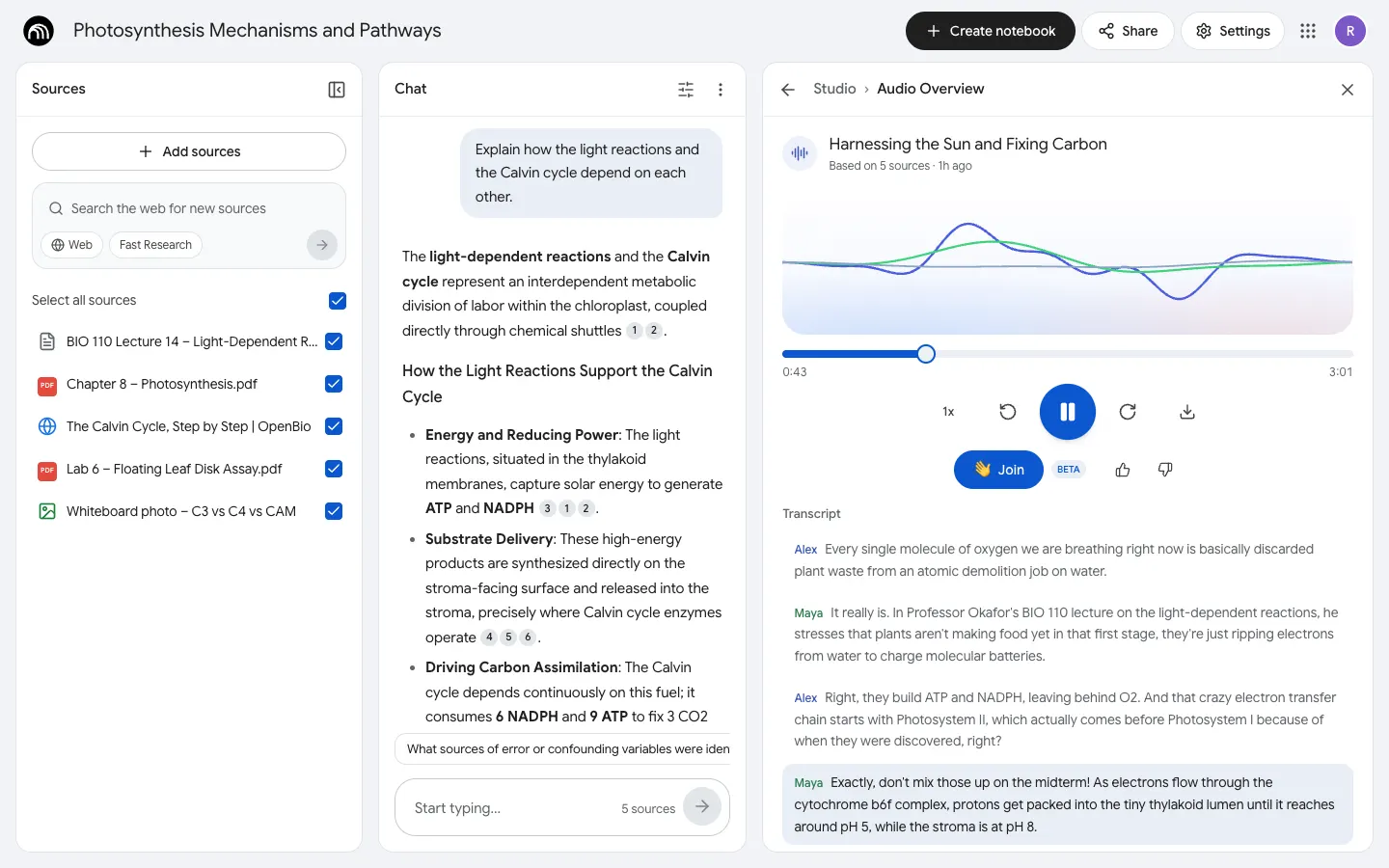
Drop in PDFs and links for cited answers, then hear two AI hosts talk them through. A good base for a study or research tool.
Hermes Agent
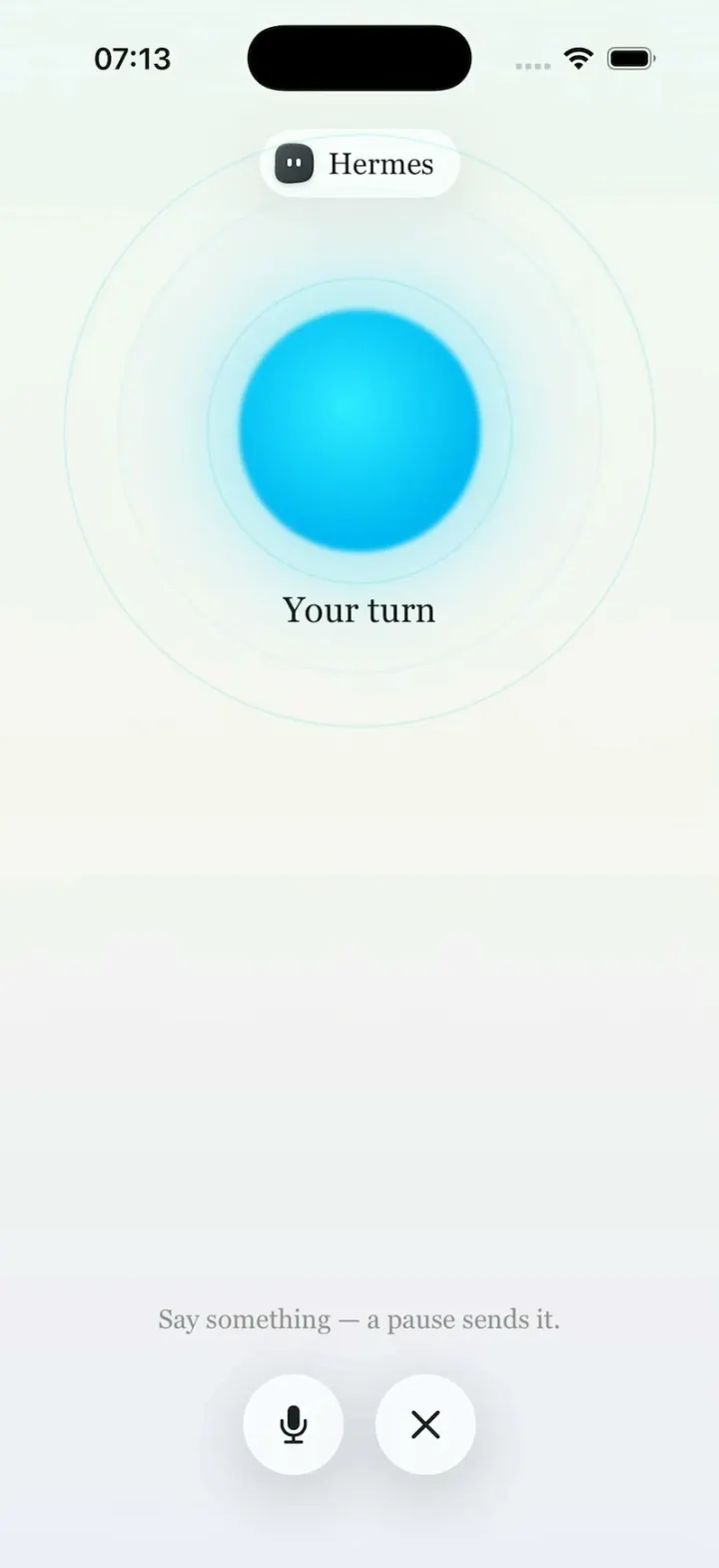
iOSAn AI agent on Claude Sonnet 5.5 that searches the web, reads pages and saves files while you watch each step.
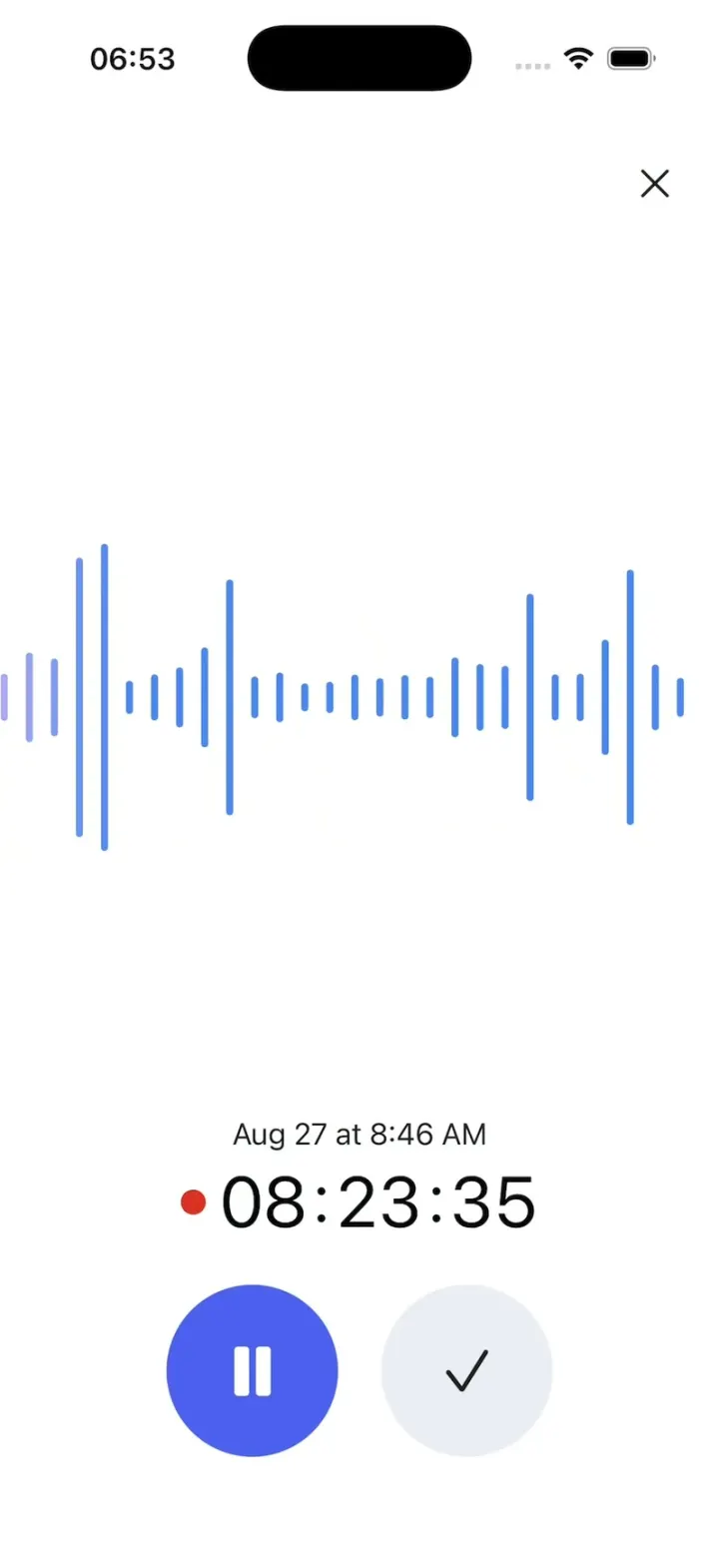
Record a lecture, get the transcript, then ask Gemini anything and jump to the exact line it came from.
- Get the prompt
Need a bot for your business?
Our support-bot prompt builds a chat page and an owner dashboard. See what it made when we ran it.


Build your own AI chatbot
None of these fit your business? Start from this prompt instead.
It builds a bakery's support chatbot as its own web app, plus a dashboard where the owner updates its answers. What it knows lives in notes and question and answer cards, like a chatbot script that actually runs. When we ran it, it took about 11 minutes and $4.36 of credits.
Swap in your own business, colors and questions before you send it.
Prompt: a support chatbot web app · 220 words
Build a customer support chatbot web app for Crumb & Co., a small bakery in Austin, Texas.

Customer chat (the home page): the bakery's name and a bread logo on top, a warm cream background (#FFF8EF), brown accents (#7A4A2A) and rounded chat bubbles. Show four starter chips: "Are you open on Sunday?", "Do you have gluten-free bread?", "Can I order a birthday cake?" and "Do you deliver?". Answers stream in from GPT-6 Luna and use only the bakery's knowledge base. If the answer isn't in it, the bot says so and shows a short form to leave an email, which saves the question for the owner.

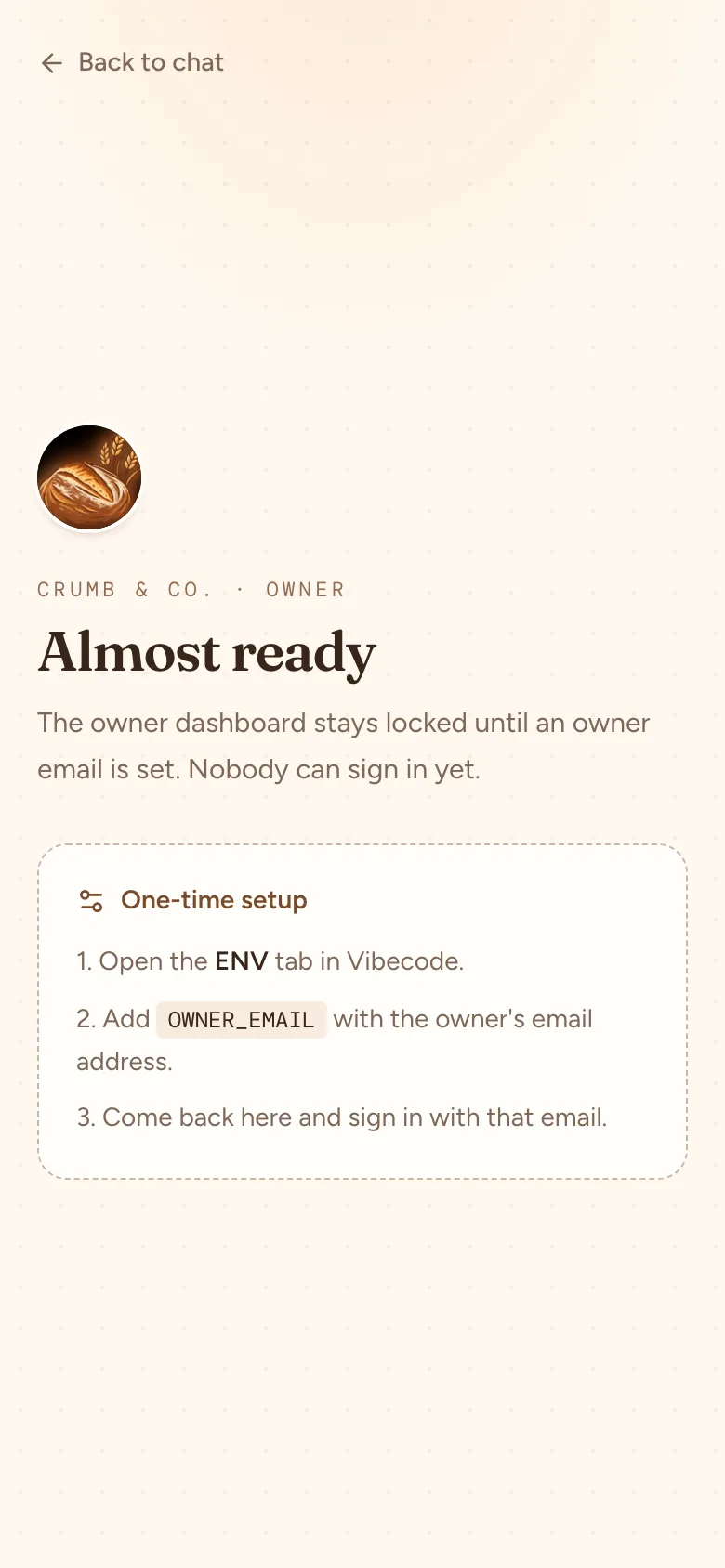
Owner dashboard (/admin): only the owner gets in, by signing in with the email in an OWNER_EMAIL setting. Check it on the server for every admin request, and let nobody in until it's set. There the owner edits the knowledge base as question and answer cards plus free notes (hours, the menu with prices, allergens, cake order rules, delivery area). They see recent chats, and an inbox of questions the bot couldn't answer, each with a "Turn into an answer" button that adds it to the knowledge base.

Seed it with a menu of 12 items with prices, opening hours, cake order rules and 6 sample chats. Make it work well on a phone.
We sent it word for word on November 24, 2026, on Claude Opus 5.5.
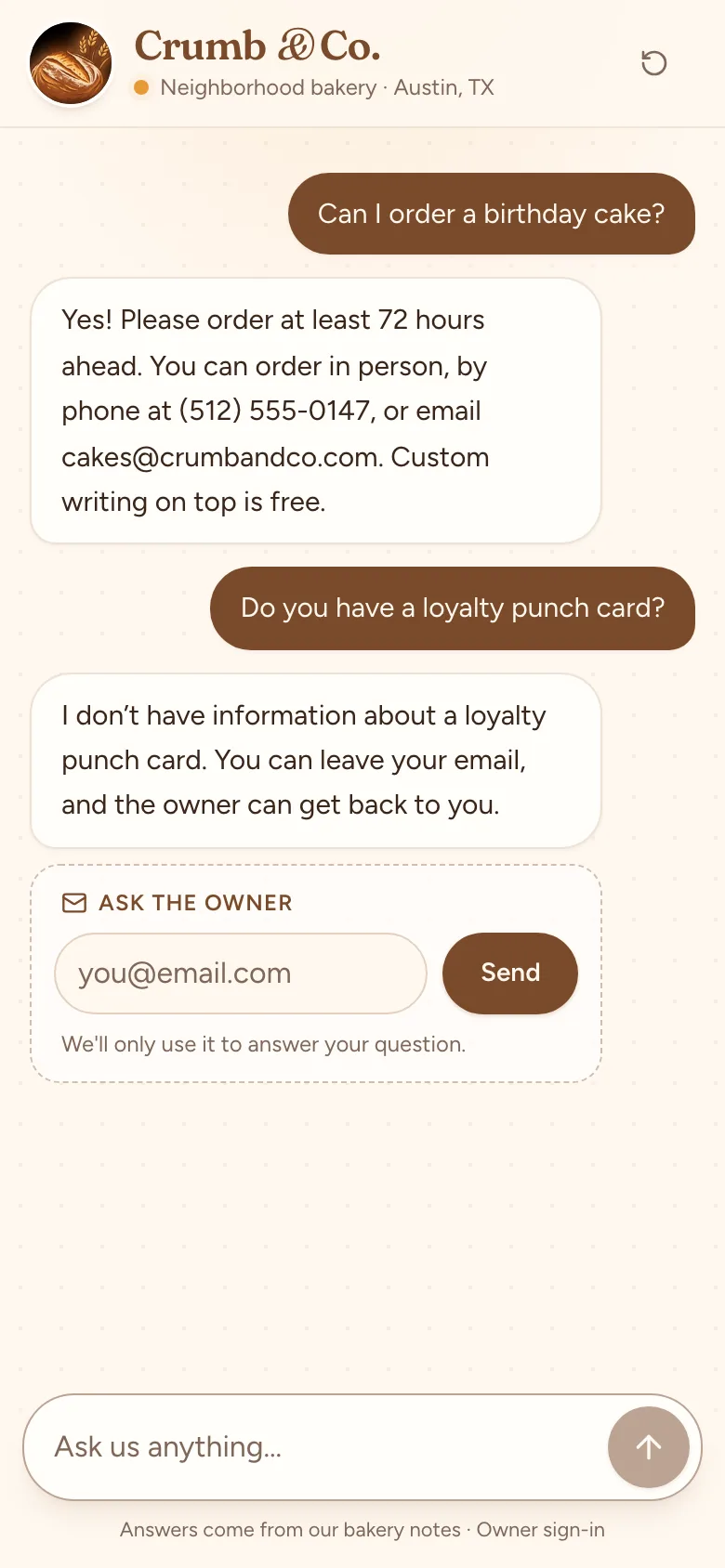
Vibecode built the chat page and the owner's dashboard, then tested both on its own.
The cake question got the right answer from the bakery's notes. A question it couldn't answer brought up the email form. The dashboard stayed locked until the agent set a test owner email. Then it turned that question into an answer, and the bot used it right away.
Before you go live, open the ENV tab, switch it to Backend and add your email as OWNER_EMAIL. Publishing carries it to the live app. Until it's set, nobody can open /admin.
Already published? Open your deployment's Environment tab, pick Backend, add OWNER_EMAIL and publish again.
What does an AI chatbot template include?
A whole working app. You get the screens, the flows and the AI, plus sample data so it looks lived in from the first tap.
Some do more:
- The ChatGPT clones draw with GPT Image, and the Gemini clone uses Nano Banana.
- The NotebookLM and ChatGPT web clones read PDFs, and Gemini Notebook transcribes lectures.
- ChatGPT, Gemini and Hermes talk back in voice mode.
- Claude Duet and Hermes run jobs for you, and Comet opens websites and clicks.
What can you build from these templates?
Any chat app you'd rather edit than build from zero. A few ideas, and where to start:
- A tutor or coach that answers in your style, from the ChatGPT web clone.
- A support bot that knows your products, from the prompt above.
- A research helper for your team's files, from the NotebookLM clone.
- A voice assistant for one job, like trip planning, from the Gemini clone.
If you write code, you can work on any of them from Claude Code, Cursor or Codex through the Vibecode MCP, on every plan. On Pro and up, you can download the whole project too.
How do I make one mine?
Hit Remix on any card. Vibecode copies the whole app into your account and runs it live in your browser, no Mac needed. It's $0 on a new account.
Then tell the agent what to change in plain English, like the example below. It edits the code, and the app updates in front of you. Changes use credits, and plans start at $20 a month.
When it's ready, Vibecode publishes iPhone apps to the App Store on the Plus plan and up, with your Apple Developer account ($99 a year). Web apps go live on a vibecode.run address or your own domain.
Example edit: turn a template into a biology tutor · 34 words
Rename this app to Sprout and make it a biology tutor for high school students. Use a green theme, explain each answer step by step, and swap the starter chips for four homework questions.
Which AI models do these templates use, and can I switch?
All of them call models through Vibecode, so you don't set up any AI keys. The ChatGPT clones and Comet use OpenAI's GPT models.
The Gemini clone, Gemini Notebook and the NotebookLM clone use Google's Gemini. Claude Duet runs on Claude Opus 5.5, and Hermes on Claude Sonnet 5.5.
To switch, just ask: "Use Claude Sonnet 5.5 for the chat." The integrations page lists every model your app can call, with prices.
Sources: Vibecode integrations and pricesHow to build a ChatGPT clone
Or start from your own idea
Describe the app you want in plain English. Vibecode builds it for iPhone or the web, runs it live in your browser, and publishes iPhone apps to the App Store.
Build your chatbot