
Table of contents
TL;DR
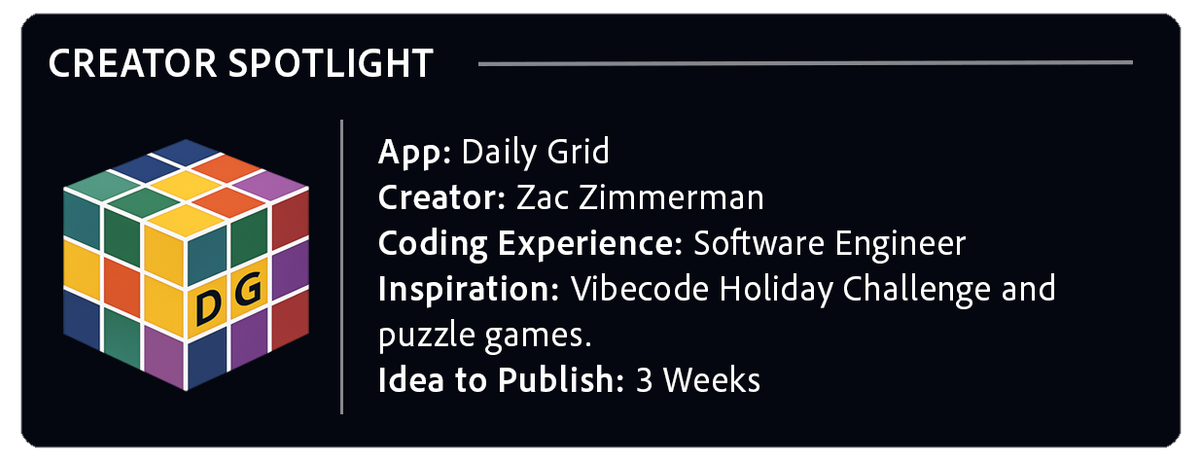
- Zac Zimmerman, a software engineer who works in Python and C, built his first mobile app, Daily Grid, in the Vibecode app.
- The first version took one weekend, about 20 hours, and finished third of 49 entries in the Vibecode Holiday Challenge.
- Getting it ready for the App Store took another 60 to 80 hours over three weeks, including a domain, a privacy policy site and Apple's review.
- His advice: find people who want to test the app before you spend money building it.
Zac Zimmerman never expected a newsletter to change his weekend plans. As a full-stack software engineer working primarily with Python and C, he'd always dreamed of creating a mobile app but never found the time to dive into native mobile development. That changed when he received a competition announcement from Vibecode, a platform he'd signed up for months earlier but never used.
"I've always wanted to develop a mobile app, like since I was in high school," Zimmerman explained. He and his college roommates had sketched app ideas on whiteboards, even taking Swift courses, but without modern AI assistance, their projects never progressed beyond basic mockups. The Vibecode Holiday Challenge offered something different: a $12 credit and a clear deadline that made the project feel achievable.
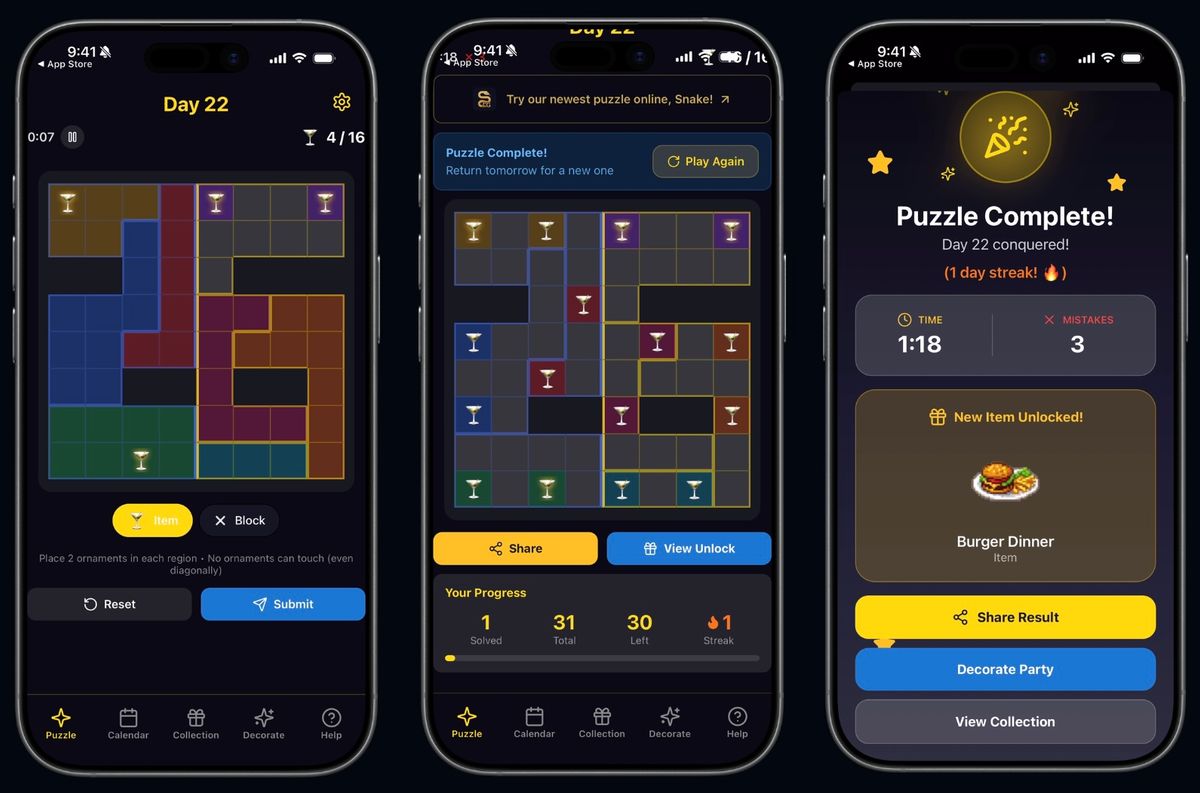
The process
Inspiration struck while Zimmerman was out celebrating his wife's birthday. Drawing from his love of New York Times and LinkedIn puzzle games, combined with his wife's passion for room decoration apps, he conceived a hybrid concept. The result was Daily Grid, a puzzle game based on LinkedIn's Queen's game but with a unique Christmas tree-shaped grid for the December theme.
The initial build consumed his weekend—approximately 20 hours split between Saturday evening and Sunday, including time spent creating Photoshopped assets. "I get into focus mode and just go," he said.
And it paid off. Out of 49 entrants, Zimmerman impressively finished third.
But transforming the contest entry into an App Store-ready product required significantly more work: another 60 to 80 hours over three weeks, including securing a domain, creating a privacy policy website, and navigating Apple's developer approval process.
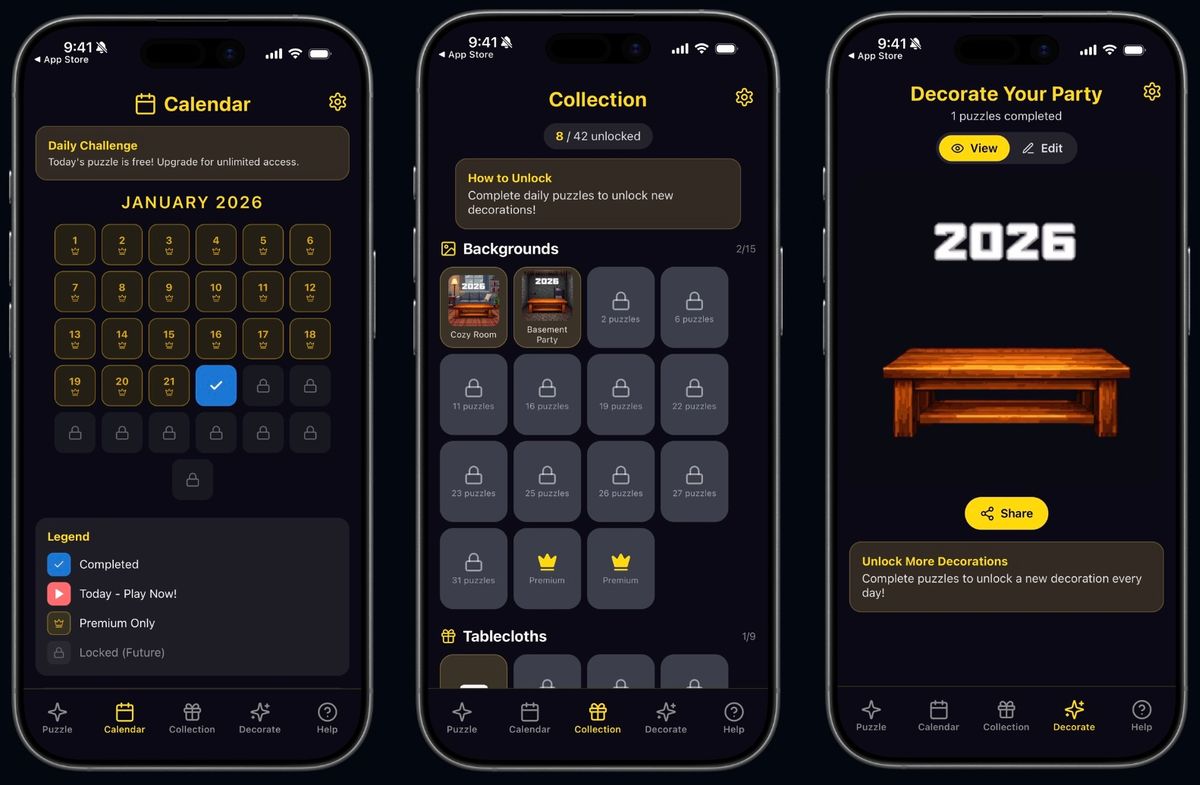
Zimmerman's business model prioritizes accessibility over profit. Like the New York Times games, anyone can play the daily puzzle for free. Premium subscribers paying $5 monthly unlock past puzzles, previous themes, and exclusive decorations. "My focus here wasn't so much to make money," he admitted. The real reward comes from his family group chat, where everyone shares their daily completion times each morning.
Advice for aspiring vibe coders
For aspiring Vibecode App developers, Zimmerman emphasizes market research first: "Find users that are willing to test it and actually want it" before spending money on development. He also stresses the importance of knowing when to use different AI models to balance quality and cost.
Having made exactly $0 so far, Zimmerman remains undeterred. He's 75% through adding a February theme and recently pushed his first update.
About the editorial team
Vishal is a product engineer at Vibecode. Before Vibecode he did product engineering at EarnIn and co-founded Ivella (YC S21), a banking app for couples. He studied computer science at Duke.

More from the Vibecode blog
Tutorial
How to make an app
How to make an app in 6 steps, the 4 ways to build one compared, and a real coffee shop app built in Vibecode, with every prompt and what it cost.
Tutorial
How to create a social media app
We built a social app for home bakers in three messages. Here are the six steps, every prompt we sent, an Instagram clone and the $40.06 it cost.
New to AI app building? Read what vibe coding means or compare the best AI mobile app builders. Have an idea? See if you can vibe code it.